
Marketing & content
Brand profiles to create on maps, social networks and directories: a checklist
A checklist of 30+ platforms for consistent brand profiles: maps, social networks, B2B directories, adding them to sameAs, and the traps when signing up.
Summary
- Every profile uses the same name, description, logo, address and website link, so Google recognizes one brand.
- Work in order: maps, social networks, company profiles, then industry directories.
- Add to sameAs only official profiles you have opened and checked.
- An AI agent fills in the forms; a person handles passwords, captchas and verification codes.
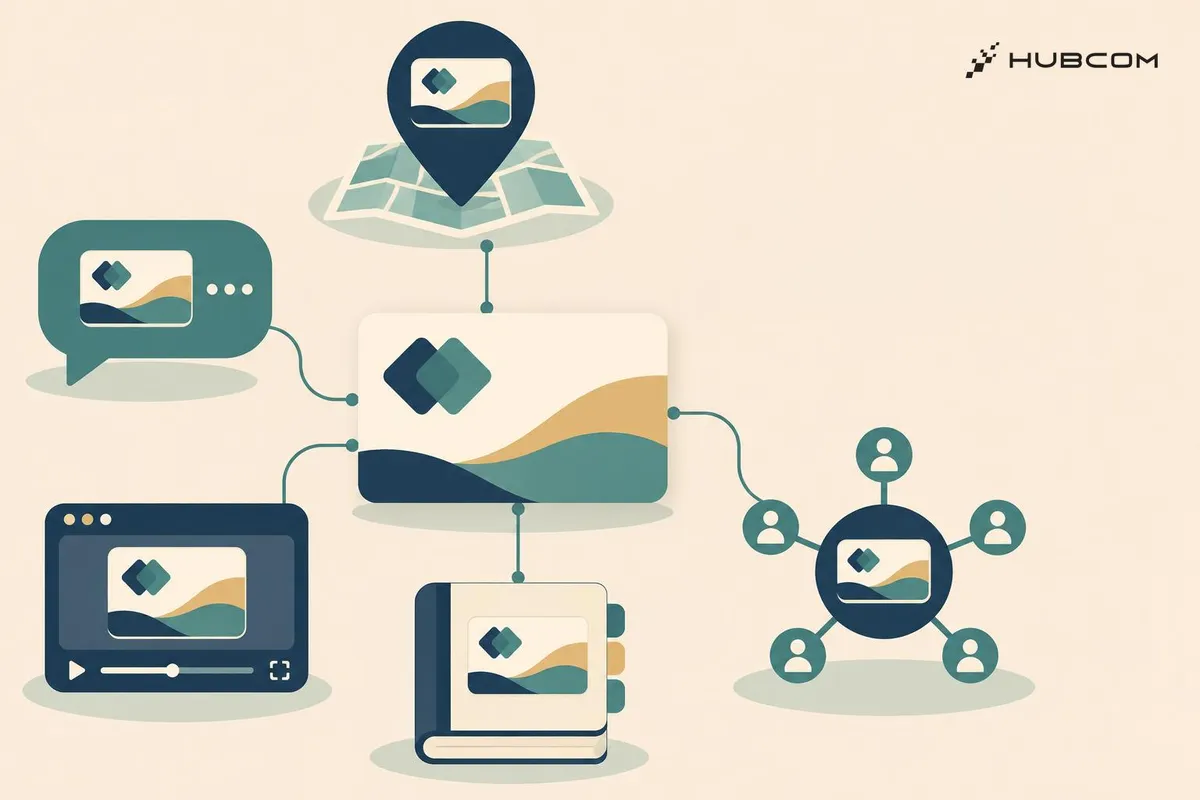
When customers look up your brand on Google Maps, Facebook or a directory, they should find the same business with the same details. This is the platform list and process we used to set up HubCom's profiles on 20–21 November 2026, written down so we can repeat it for the next brand.
The list suits a B2B services company. A retail or food brand keeps the map and social groups and swaps the B2B directories for directories in its own industry.
Why profiles on many platforms
- Google collects information about a business from its website and other sites. The Organization schema on your website declares the official profiles through the
sameAsproperty. - Consistent details everywhere make it less likely that Google or an AI assistant confuses you with a company of the same name.
- Customers check before they get in touch: they search maps, social networks and directories.
- Each profile is a path back to your website, measurable when the link carries UTM.
Prepare a brand fact sheet
Keep it in one file; every profile is copied from it.
- Display name, legal name and tax ID.
- A fallback name for collisions. GoodFirms, TechBehemoths and DesignRush already listed a company called "HubCom" or something close, so we used "HubCom.tech" on all three.
- Website, email, phone and address, written identically on every profile.
- A short description under 160 characters and a long one, each in Vietnamese and English.
- Founding year, team size and minimum project size. Almost every B2B directory asks.
- Service categories using the names directories use: Custom Software Development, Web Development, Mobile App Development.
- Images: a 500 px square logo plus a padded copy for circular crops, a 1200 px square logo (Apple needs at least 1024 px), a 600×300 horizontal logo, and an 1800×1170 cover.
- A UTM-tagged website link per profile, following your UTM convention.
The platforms
1. Maps (do these first)
- Google Business Profile: the first profile people see when they search your name. The business must be verified.
- Bing Places: imports directly from Google Business Profile.
- Apple Business Connect: for Apple Maps. Needs a D-U-N-S number and the business registration certificate; Apple quotes up to five days for review.
2. Social networks
- Facebook, Instagram, Threads: Meta's three profiles; keep the same username.
- LinkedIn company page: where B2B buyers and candidates look you up.
- TikTok, YouTube, X: claim the same username where it is free.
- Zalo OA and WhatsApp Business: messaging for customers in Vietnam and abroad.
3. Company and technical profiles
- Crunchbase: search before creating. HubCom's profile already existed, with the wrong team size.
- GitHub organization: for software companies.
- Dev.to or Medium: an organization page to republish technical posts.
4. B2B directories
- Clutch: creating a Clutch profile also gives you a profile on The Manifest.
- GoodFirms, DesignRush, TechBehemoths, Sortlist, TopDevelopers: all review listings by hand. We submitted on 20–21 November 2026 and are waiting for approval.
- G2 (Services): sign-in by emailed link; HubCom's profile was approved on 21 November 2026.
5. Vietnamese directories and job sites
- Trang Vàng (Yellow Pages Vietnam): they call to confirm and offer advertising; the listing does not require buying any.
- TopDev, ITviec, TopCV, VietnamWorks: company pages for candidates. ITviec only shows companies with a paid job post, so leave it until you hire.
Later
- Product Hunt: as part of a product launch, planned on its own.
- Behance, Dribbble: once you have real project images.
- Wikipedia, Wikidata: once independent press has written about the company.
Skip
- Sites that exist only for backlinks: bookmarking sites, profiles on unrelated forums.
- Trustpilot: not a fit for a B2B services company like HubCom.
Signing up with an AI agent
- The AI agent fills in forms from the brand fact sheet.
- A person handles verification: passwords, captchas, verification codes and Google sign-in.
- Stop when a platform blocks you. After two failed attempts, mark it "dropped" with the reason; forcing it risks a locked account.
- Track every platform in one table: sign-up link, status (live, pending, not started, dropped) and profile link.
Common traps
- "Done" is not always done. Open each profile link before marking it live.
- The
&in UTM links gets mangled. Dev.to turns it into&, the Trang Vàng form rejects it, and Apple accepts no parameters. Use the plain link there; GA4 still records the visit as a referral from that site. - Some platforms only edit links in their app. Instagram bio links are edited in the app only; TikTok on the web has no website field.
- A personal profile is not a company profile. The founder's Upwork profile and side channels stay out of the Organization's
sameAs. - Old profiles drift. Job sites may still show an old address or team size; log it in the tracking table and fix it over time.
Checking the result
- Every "live" profile opens while signed out.
- Name, description, logo and website link match the brand fact sheet.
- Click the website link on each profile: it opens the right page, and GA4 Realtime shows the right source.
- Add the profile links to
sameAsin your Organization schema and check it with the Rich Results Test. As of 21 November 2026, the HubCom website lists 13 profiles insameAs.
Out of scope
Content for each channel, asking past clients for reviews, and paid placements on directories. How we tag links with UTM and measure visits from these profiles is in our measurement dev log.
Terms in this article (6)
- Entity
- A specific thing such as a company, person or place that search engines recognize and gather information about.
- sameAs
- A schema.org property listing other pages about the same thing, such as a company's social profiles.
- Organization schema
- Structured data on a website telling Google the business's name, logo, contacts and official profiles.
- Google Business Profile
- A business listing shown on Google Maps and in Google Search results.
- D-U-N-S
- Dun & Bradstreet's nine-digit business identifier; Apple uses it to verify businesses.
- UTM
- Parameters added to a link so analytics tools know the visitor's source, channel and campaign.
Frequently asked questions
How many platforms should a brand be on?
Enough that customers find you wherever they search: maps, the main social networks and a few industry directories. An empty or outdated profile does nothing for customers.
Which profiles belong in sameAs?
The organization's official profiles that you have opened and checked. Not personal profiles or side channels.
What if a directory already lists a company with your name?
Pick a distinct name, such as your domain, and use it the same way on every directory with a collision.
Sources
- Organization Schema Markup, Google Search Central
- sameAs, Schema.org
- URL builders: Collect campaign data with custom URLs, Google Analytics Help
- UTM convention for links to hubcom.tech, HubCom